Clinical symptom reference
The most common hospice symptoms, explained the way a nurse would at the bedside.
Books
For the families keeping watch
You're left trying to remember everything she said.
JourneyCalm presents
What's inside
The most common hospice symptoms, explained the way a nurse would at the bedside.
What each medicine does and what to watch for. No decoding required.
Log what you see, and the questions to ask before your nurse returns.
Now available
The resource you reach for when your nurse won't be back until morning.
For hospice founders
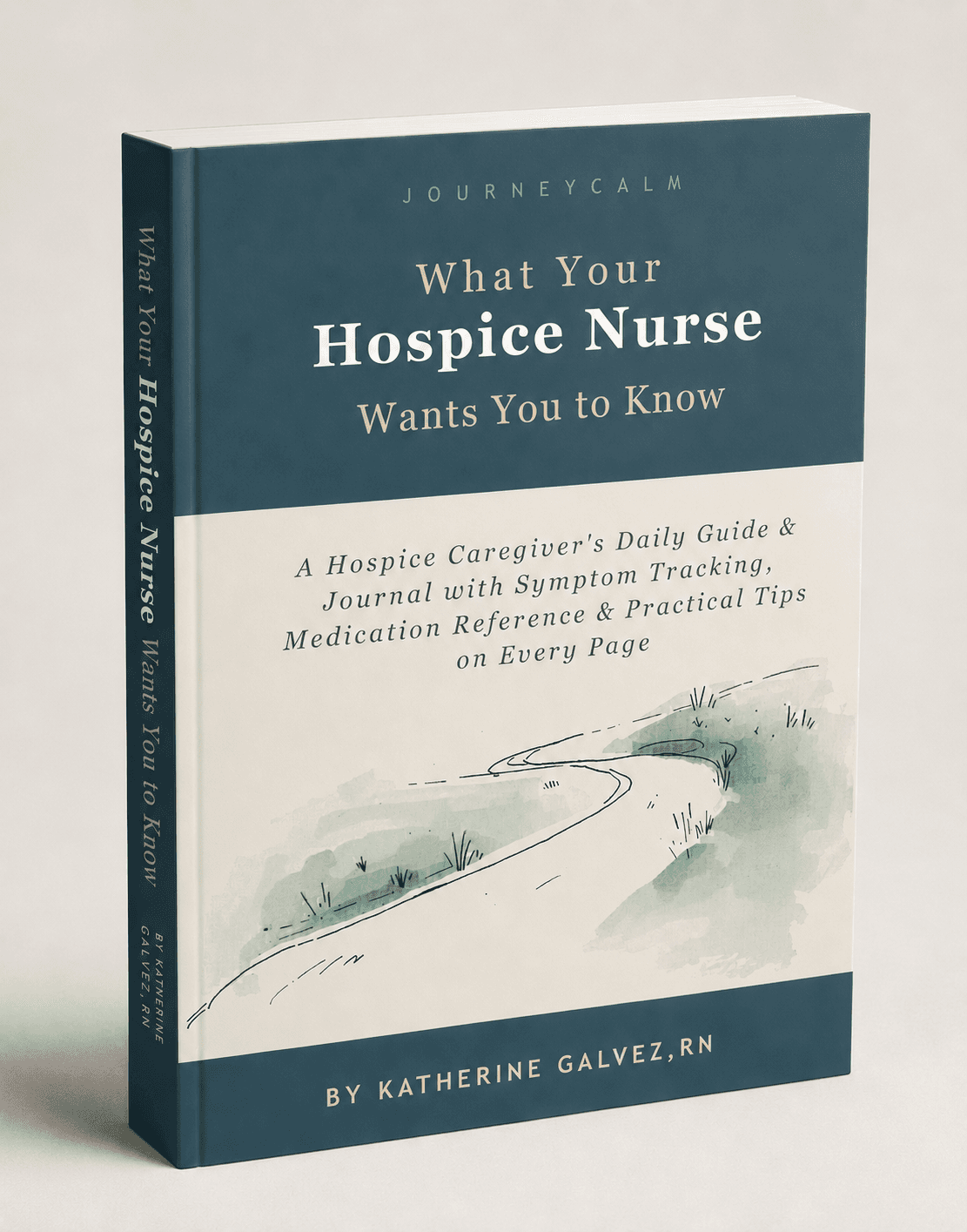
Your hospice nurse explains everything at every visit. Then they leave. And it's just you — at midnight, exhausted, trying to remember what they said. What Your Hospice Nurse Wants You to Knowwas written for that moment. Created by Katherine Galvez, RN — a hospice nurse with over a decade of clinical experience — this guide gives family caregivers fast, simple answers to the questions that come up between visits. No jargon. No textbook chapters. Just clear, direct information written the way a nurse talks to a family. Inside: a clinical reference section covering the most common hospice symptoms, a medication guide with side effects explained in plain language, a daily care tracker to log observations and questions, and practical tips on every page from an experienced hospice nurse. This guide doesn't sit on a bookshelf. It sits on the kitchen counter or the nightstand. It's the resource you reach for when you need a fast answer and your nurse won't be back until morning.
Why it matters
Hospice family education is more than kindness. It shapes trust, length of stay, CAHPS communication, staff burden, referrals, and the way families talk about your hospice long after care ends.
Better-educated families
Consistent high-quality education
Improved length-of-stay
Stronger CAHPS scores
Powerful word-of-mouth marketing from appreciative families
Competitive differentiation
Stronger referral relationships
Bolster compliance efforts
A usable guide
Covers the symptoms caregivers face most often: pain and discomfort, constipation, shortness of breath, agitation and restlessness, nausea and vomiting, and changes in eating and drinking.
Covers the drugs most commonly used in hospice care: what each one is for and what side effects to watch for.
Gives an honest, compassionate look at what to expect in the final days and hours, and what to do when death occurs.
Provides structured pages for logging symptoms, medications, observations, and questions so everything stays in one place.
What's inside?
Hospice care brings a team of skilled professionals into your home — nurses, aides, social workers, chaplains. But the hours between visits belong to you. Those are the moments when questions surface, symptoms change, and you wish you had someone to ask. What Your Hospice Nurse Wants You to Knowfills that gap. Written by Katherine Galvez, RN — with more than a decade of clinical nursing experience and five years caring exclusively for hospice patients — this guide was designed to sit on the nightstand or the kitchen counter, not a bookshelf. It isn't a book to read cover to cover. It's the resource you reach for in a quiet five minutes between tasks, when you need a fast answer, or when you just need to feel a little less alone.
What's inside:
Throughout the entire guide, practical tips on every page from an experienced hospice nurse offer the kind of guidance that only comes from years at the bedside and hundreds of family conversations. What Your Hospice Nurse Wants You to Know is especially valuable for caregivers just beginning the hospice journey — and a steady companion for anyone navigating end-of-life care who is tired, overwhelmed, and deserving of something that actually helps.
About the author
Katherine Galvez is a registered nurse with over a decade of clinical experience, five of those years specialising in hospice care. She has worked alongside hundreds of families navigating end-of-life, providing hands-on care, around-the-clock support, and the kind of practical education that rarely fits into a single visit. She created JourneyCalm after recognising a gap that no amount of bedside teaching could fully close: the hours between nurse visits, when families are alone, exhausted, and trying to remember what to do. What Your Hospice Nurse Wants You to Know is her answer to that gap — written in the plain language she uses every day with real families, not the language of textbooks. Katherine continues to work in hospice and is building the JourneyCalm platform to extend clinical education and caregiver support beyond the bedside.
Available now
The guide supports, but does not replace, the clinical judgment of the hospice team. Families should contact their hospice provider for urgent symptoms, medication questions, or changes in condition.